
Bridging the Online-Offline Gap
How I led a 0-to-1 internal venture to integrate physical retail into a digital hotel booking journey, utilizing data to overcome complex logistical constraints
Context & Challenge
The Business Mandate: Survival and Expansion
Following a major merger between China’s top two OTAs, my incubation unit operated under extreme pressure. Having survived the internal consolidation by meeting aggressive digital KPIs, we earned a high-stakes mandate: to lead the department's expansion into Physical Retail and establish a new, sustainable revenue engine.
Diagnosing the Market Friction
Through market and behavioural analysis, I identified a distinct friction point in the post-COVID travel experience:
The User Demand: Travellers exhibited heightened "hygiene anxiety," driving a strong desire for personal, single-use travel essentials (e.g., bed linens, towels).
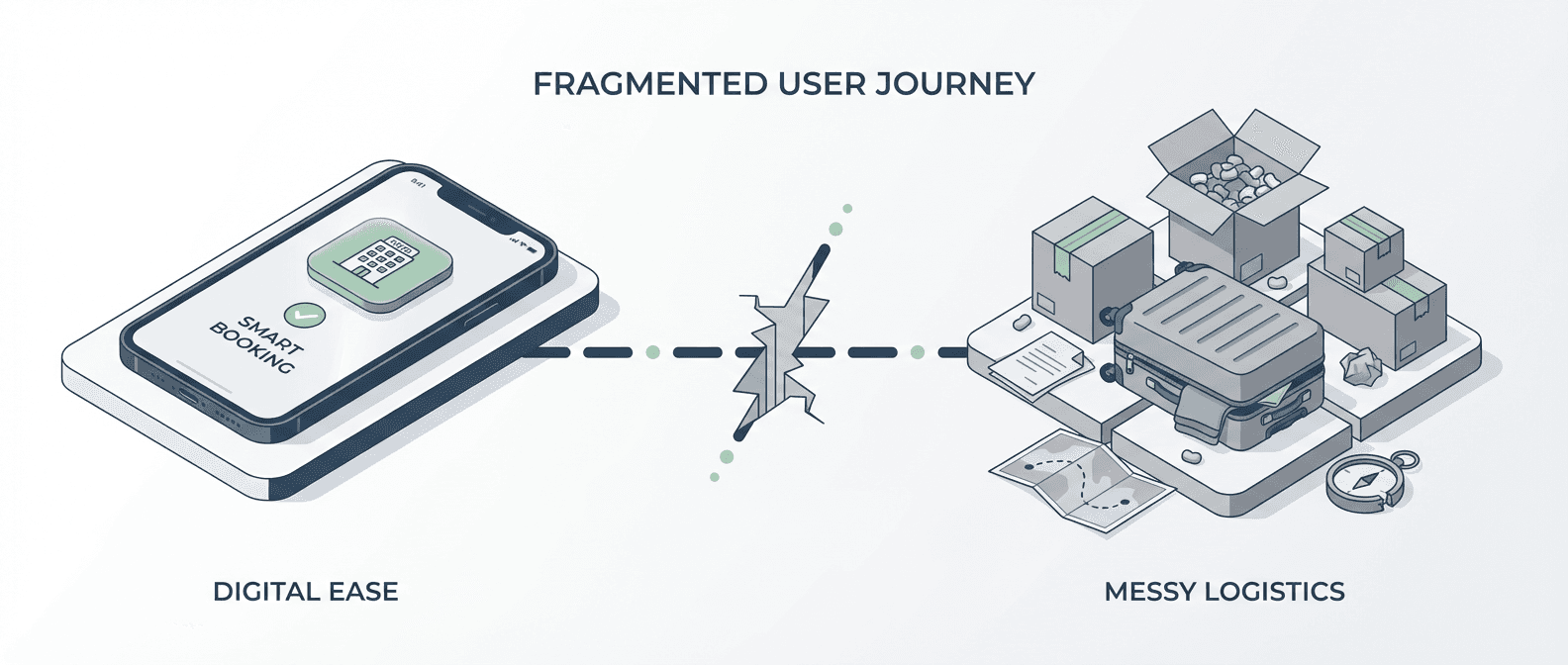
The Existing Gap: Relying on fragmented e-commerce platforms to buy and pack these items was a high-effort, high-friction user journey.
The Strategic Problem: Demand vs. Distributed Inventory
The user need was clear, but the operational reality was complex. As a digital-first company, we had no physical footprint inside the hotels. The strategic challenge was: How could we capture this retail demand and deliver a consistent brand experience, without the massive risk of distributing inventory across thousands of unmanaged hotel front desks? We needed an asset-light O2O operational framework.
Strategic Formulation & Validation
The Asset-Light Logistics Model & Private Label
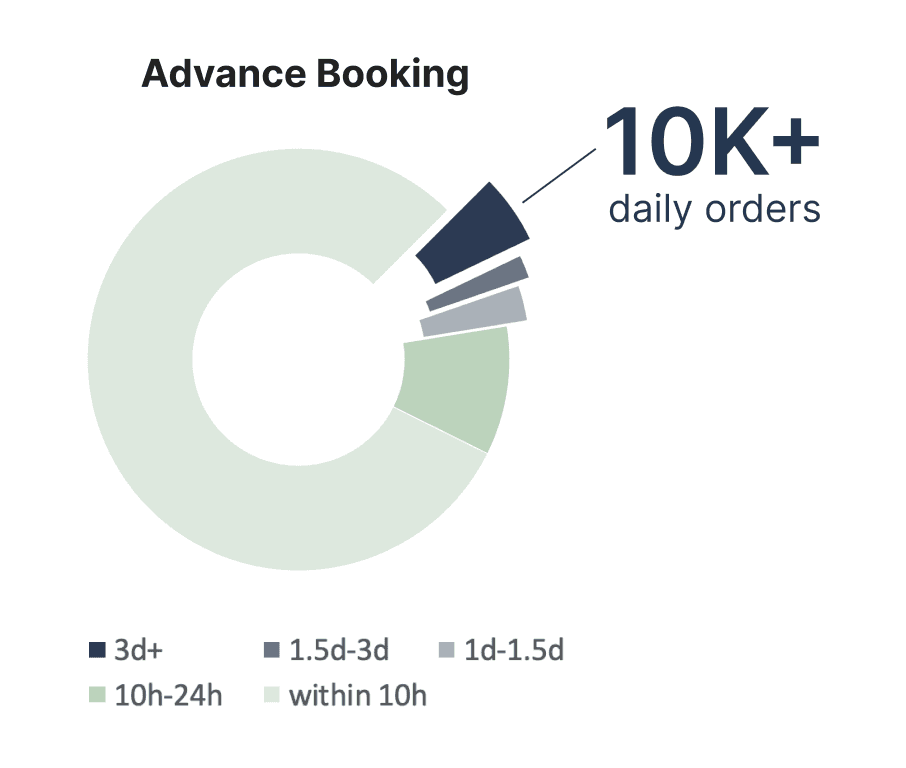
To maximise profit margins and control quality, we repackaged the travel essentials under our own proprietary brand. However, storing this inventory locally at hotels was unviable. Interrogating historical booking data revealed a critical operational window: a highly profitable segment of users booked their accommodation 3 to 7 days in advance.
This insight drove our "Time-Lag Fulfilment Strategy." Instead of distributed local inventory, we partnered with a 3PL provider to utilise centralised regional warehouses. The 3-to-7-day window allowed us to dispatch our branded kits directly to the hotel front desk prior to the guest's arrival, keeping our physical footprint extremely light while ensuring next-day reliability.
Risk Mitigation & Phased Go-to-Market (GTM)
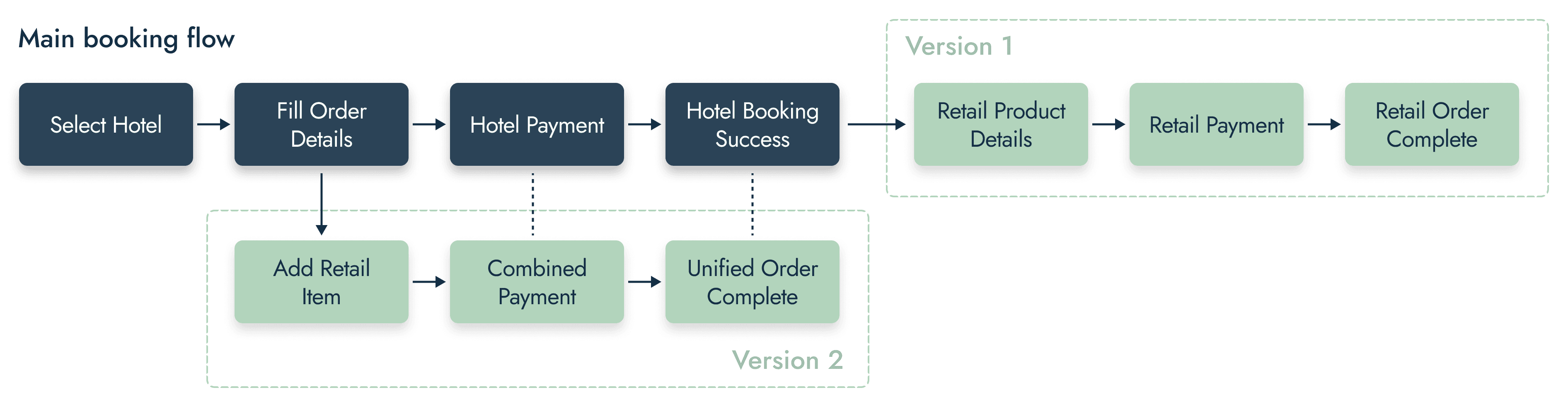
To validate this unproven O2O model without cannibalising the core digital ticketing revenue, I architected a strict, two-phase rollout strategy:
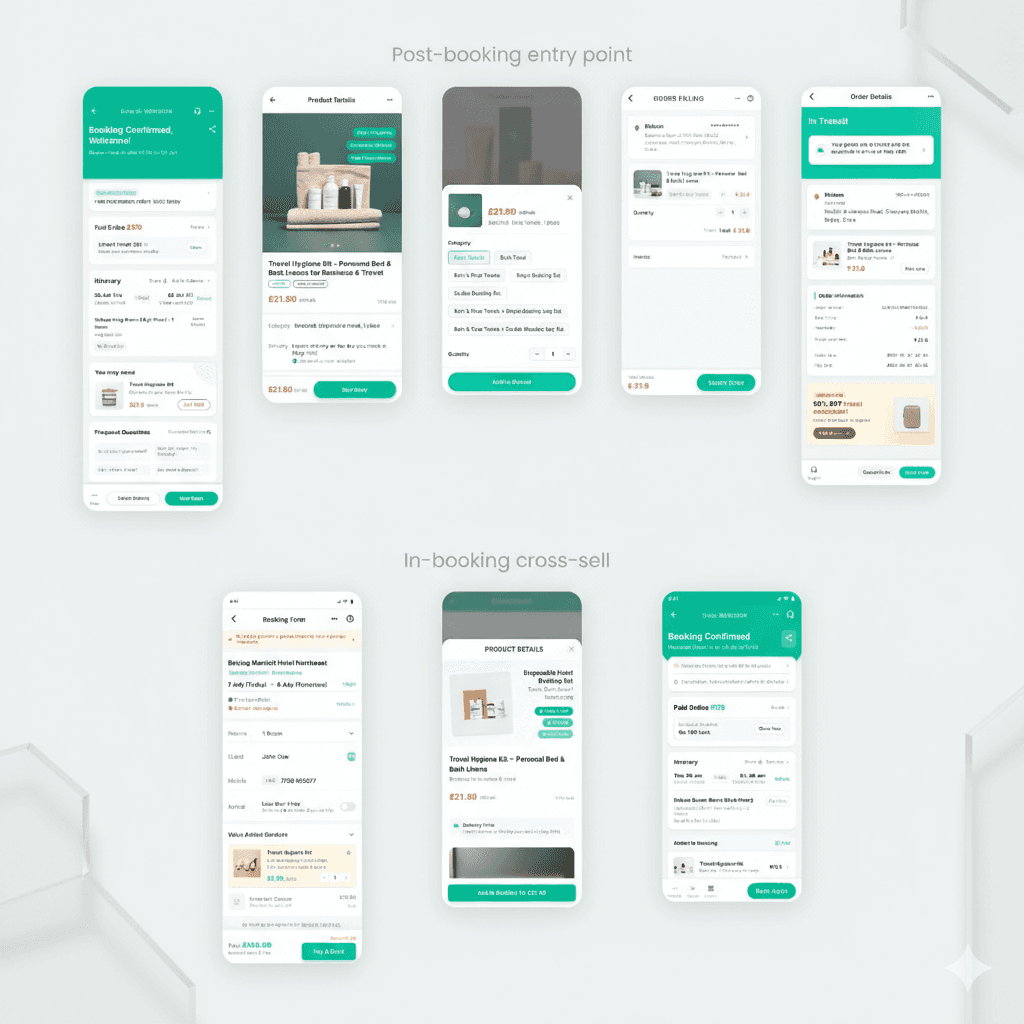
Phase 1 (De-risking & Validation): Launched exclusively on the Post-booking Page. This targeted high-intent users in a low-risk environment, allowing us to stress-test the logistics network and validate the operational viability of the regional delivery model.
Phase 2 (Revenue Scaling): Once the fulfilment architecture was proven reliable, we integrated the offering directly into the Main Booking Flow to maximise visibility and scale the revenue stream.
Architecting the Service Blueprint
Eradicating Conversion Friction
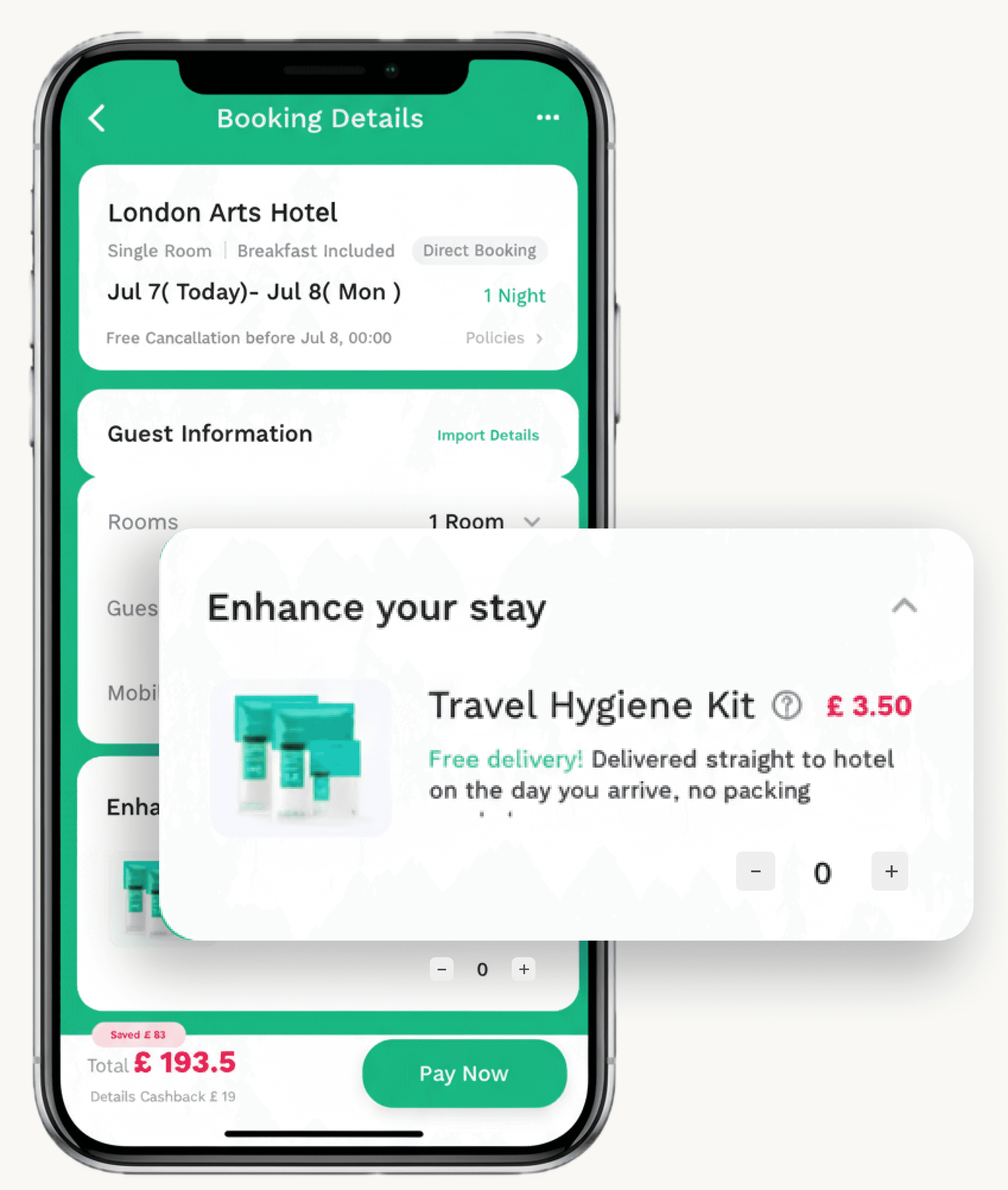
With the logistical framework established, the digital touchpoints needed to facilitate a frictionless transaction. The highest drop-off point in traditional e-commerce is the manual entry of delivery details. To solve this, I designed a zero-input fulfilment loop.
By bridging the data between the digital booking system and the physical retail system, the UI automatically extracted the Hotel Address and Check-in Date from the primary reservation. The user was presented with a locked, pre-filled delivery state: "Dispatched directly to [Hotel Name] front desk for your arrival." This removed the cognitive load of coordinating logistics.
Contextual & Non-Intrusive Upselling
For the Phase 2 (Scale) rollout, the strategic priority was protecting the conversion rate of the primary hotel booking. The retail cross-sell had to be entirely seamless.
Smart Triggers: The retail module was dynamically surfaced only for non-cancellable bookings, eliminating the systemic risk of users cancelling a room while a physical package was already in transit.
UI Integration: I utilised a compact, contextual 'capsule' component within the booking form. This allowed users to merge the retail item into their primary transaction with a single tap, creating a unified checkout experience without distracting from the main conversion goal.
Closing the End-to-End Service Blueprint
Diagnosing the Physical Touchpoint Friction
While the digital conversion metrics (Phase 1) were highly promising, post-launch qualitative feedback highlighted a critical breakdown at the physical handover. Because this "in-flow retail" model was entirely novel, users lacked a mental model for retrieving e-commerce goods at a hotel front desk. This expectation gap resulted in hesitation, awkward interactions with hotel staff, and an influx of customer support inquiries.
Strategic Intervention: Content as an Operational Lever
I recognised that the service blueprint was incomplete if the physical experience failed. Rather than engineering a costly new digital feature to solve an offline problem, I utilised content strategy as a high-impact, zero-code operational lever.
I audited and overhauled the post-purchase communication flow to actively manage user expectations:
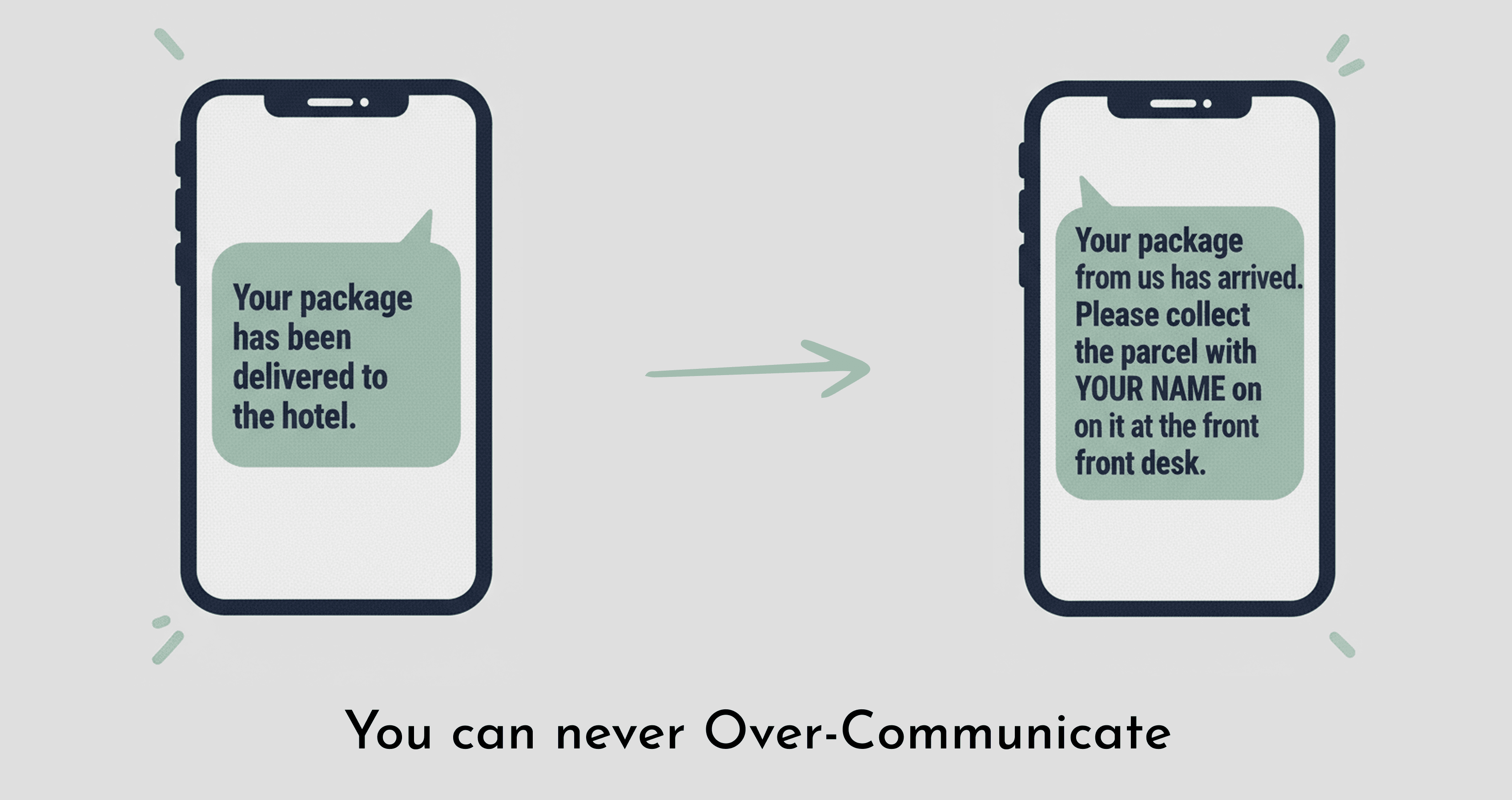
Behavioural Nudging: I rewrote the automated SMS and push notifications to act as explicit behavioural scripts ("Your parcel has arrived via our courier partner. Please ask the front desk for a package under [Your Name] when checking in.").
The Outcome: This precise expectation management recalibrated the user's mental model from a "bespoke hotel service" to a "standard courier delivery." It effectively eradicated the social friction at the front desk, seamlessly closing the final mile of the O2O loop.
Commercial Impact & Scalability
From Pilot to Sustainable Revenue Engine
The strategic implementation of the "Time-Lag Logistics" model successfully transformed a fragmented user need into a highly scalable, physical revenue stream for a digital-first department.
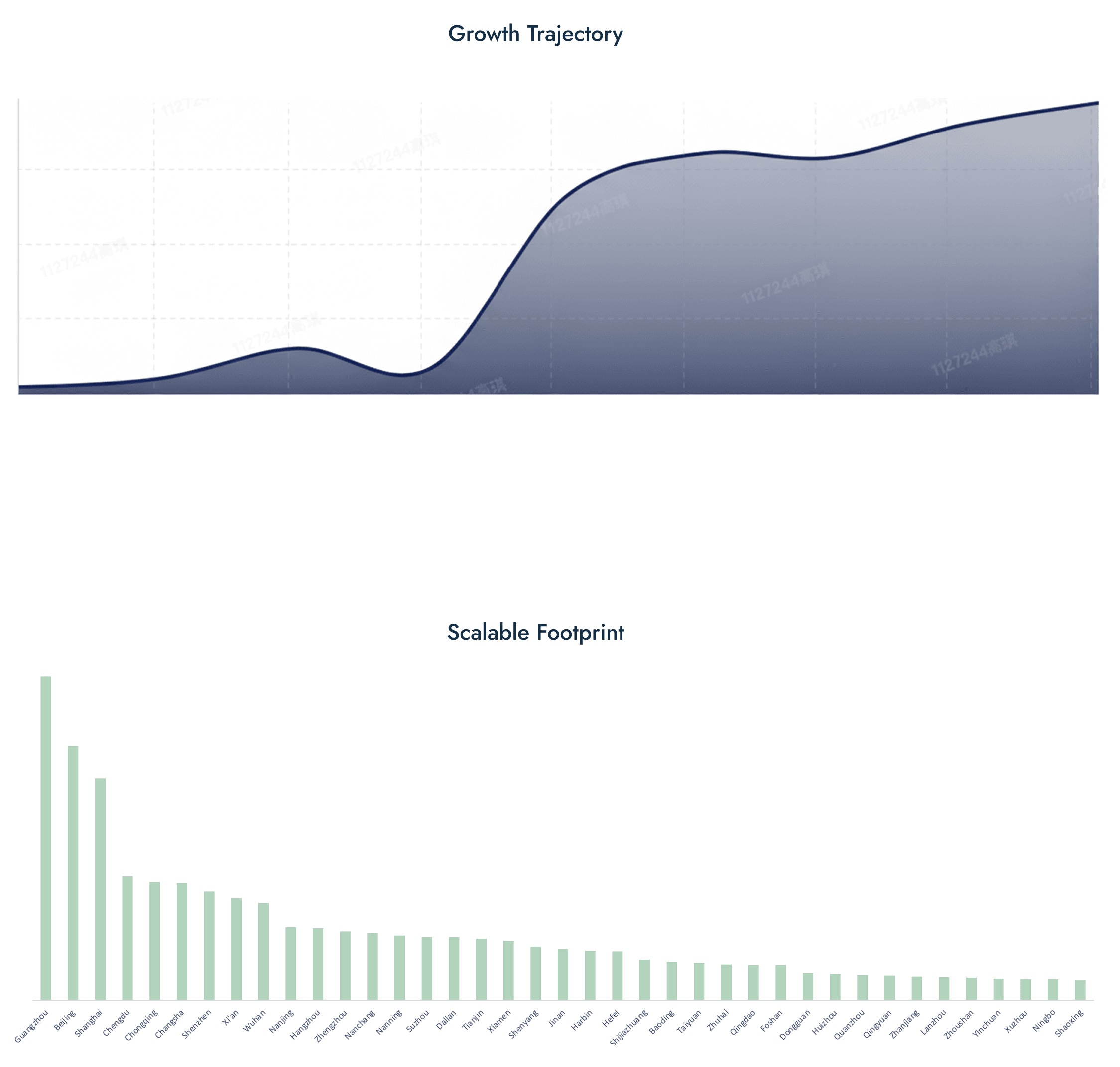
Market Validation (Phase 1): The initial MVP captured a peak 17.5% conversion rate at the post-booking touchpoint, definitively proving the commercial viability of cross-selling physical travel essentials.
Exponential Monetisation (Phase 2): Upon integrating the offering into the primary hotel booking flow, the service experienced rapid, exponential growth in daily order volume. This strategic placement maximised visibility without cannibalising core ticketing revenue.
Asset-Light Scalability: The overarching operational framework proved inherently robust. By leveraging 3PL regional hubs instead of managing local hotel inventory, the service footprint rapidly expanded across hundreds of Tier-1 and Tier-2 cities nationwide, creating a highly scalable and profitable private-label revenue stream.
Note: The original product was designed and deployed in Simplified Chinese. The UI screens displayed above have been translated and visually updated for this portfolio to clearly illustrate the UX rationale and interaction logic without language barriers.